SMOKE FROM FIRES & AIR QUALITY
How can I tell if smoke is affecting the air quality in my community?
- Check your local air quality at Washington Air Quality Advisory Map and Airwatch Northwest.
- Check wildfire locations on the Washington Smoke Information website.
Outdoor smoke contains very small particles and gases, including carbon monoxide. These particles can get into your eyes and lungs where they can cause health problems
What health problems does smoke cause?
- Eye, nose, and throat irritation (burning eyes and runny nose).
- Wheezing, coughing, shortness of breath, and headaches.
- Aggravation of existing lung, heart and circulatory conditions, including asthma and angina.
Who is especially sensitive to smoke?
Inhaling smoke is not good for anyone, even healthy people. People most likely to have health problems from breathing smoke include:
- People with lung diseases such as asthma or chronic obstructive pulmonary disease (COPD), including bronchitis and emphysema.
- People with respiratory infections, such as cold or flu.
- People with existing heart or circulatory problems, such as congestive heart failure, coronary artery disease, and angina.
- People with a prior history of heart attack or stroke.
- Infants and children because their lungs and airways are still developing and they breathe more air per pound of body weight than adults.
- Older adults over age 65. Adults age 65 and older may have unrecognized heart or lung disease.
- Smokers already have lower lung function or lung disease, and breathing smoke can make their conditions worse.
- Diabetics.
How can I tell if smoke is affecting my family?
- Smoke can cause coughing, scratchy throat, irritated sinuses, shortness of breath, chest pain, headaches, stinging eyes, and runny nose.
- If you have heart or lung disease, smoke might make your symptoms worse.
- People who have heart disease might experience chest pain, a rapid or irregular heartbeat, shortness of breath, and fatigue.
- If you have a pre-existing respiratory condition such as asthma, COPD (including chronic bronchitis and emphysema), or allergies, smoke may worsen symptoms (inability to breathe normally, cough with or without mucus, chest discomfort, wheezing, and shortness of breath).
- When smoke levels are high, even healthy people can have symptoms or health problems.
Contact your health care provider if you have heart or lung problems when around smoke. Dial 911 for emergency assistance if symptoms are serious.
What can I do to protect myself and my family from outdoor smoke?
- Check local air quality reports and listen to news or health warnings for your community.
- Avoid physical exertion outdoors if smoke is in the air.
- If you have asthma or other lung diseases, make sure you follow your doctor’s directions about taking your medicines and follow your asthma management plan. Call your health care provider if your symptoms worsen.
- Stay indoors and keep indoor air as clean as possible. Take the following steps when indoors:
- Keep windows and doors closed. If there is no air conditioning and it is too hot to keep windows and doors closed, consider leaving the area.
- Run an air conditioner (if you have one), set it to re-circulate and close the fresh-air intake. Make sure to change the filter regularly.
- Use a high-efficiency particulate air (HEPA) filter to reduce indoor air pollution. A HEPA filter may reduce the number of irritating fine particles in indoor air. A HEPA filter with charcoal will help remove some of the gases from the smoke.
- Don’t add to indoor pollution. Don’t use candles, fireplaces, or gas stoves. Don’t vacuum, because vacuuming stirs up particles already inside your home. Don’t smoke, because smoking puts even more pollution into the air.
- Some room air cleaners can help remove smoke particles indoors. California’s air cleaning devices for the home fact sheet (PDF).
- Information about keeping indoor air free of smoke: Improving Ventilation and Indoor Air Quality during Wildfire Smoke Events (PDF).
Should I use a face mask when there is outdoor smoke?
If you cannot leave the smoky area or find other ways to reduce your exposure, certain types of face masks can provide some protection. Respirator masks labeled N95 or N100 filter out fine particles but not hazardous gases (such as carbon monoxide). These masks can be found at many hardware and home repair stores and pharmacies. Face masks will not work for everyone.
- Masks do not work on people with beards or small children because they do not seal well enough to provide protection.
- Anyone with lung disease, heart disease, or who is chronically ill should consult a health care provider before using a mask. Wearing a mask makes it more difficult to breathe, which may worsen existing medical conditions.
- Wildfire Smoke and Face Masks Fact Sheet (PDF)
Can I use an air filter in my home to improve indoor air quality?
Some room air cleaners can reduce indoor air pollution if they have the proper filter. The most effective air cleaners have a HEPA filter which removes the fine particulates from smoke. HEPA filters with charcoal will remove or reduce chemicals in the air, but not carbon monoxide. Air filtration units should be located in the room where you spend most of your time.
- For more information, see California’s air cleaning devices for the home (PDF).
Should I exercise outdoors when it’s smoky?
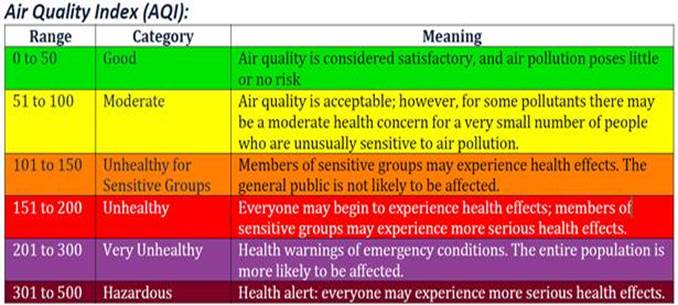
Avoid outdoor exercise when air quality is in the “Unhealthy, Very Unhealthy, or Hazardous” categories. If you are sensitive to smoke, you should limit your outdoor activities when air quality is in the “Unhealthy for Sensitive Groups” category. People with asthma and lung and heart conditions may be very sensitive to poor air quality and may start to have symptoms when air quality is in the “Moderate” category.
- Check outdoor air quality to see the category for your area on the Washington Air Quality Advisory Map.
What should I do if I have to drive when it’s smoky?
Avoid driving, when possible. If you must drive, keep the windows and vents closed. Most vehicles can re-circulate the inside air which will help keep particle levels lower.